
Microsoft is tackling the persistent issue of forced Windows 11 updates by testing a more adaptable pause mechanism. By granting access to a calendar interface, the system will soon allow users to nominate a specific date to resume downloads rather than relying on fixed weekly intervals.
While rumors of this update have persisted for months, new visual evidence from Windows Latest demonstrates exactly how the “flexible” pause will integrate into the settings menu. This shift aims to give individuals more authority over their own devices.
The current “Windows as a Service” model ensures users receive at least two updates monthly – a frequency that sometimes doubles if emergency patches are required to fix previous errors. This constant stream of maintenance has often been a point of friction for the user base.
Presently, navigating through the Windows Update menu only allows for 1 to 5-week delays for standard users. While Enterprise and Pro versions can defer updates for significantly longer periods, the average consumer has remained locked into these rigid increments until now.
The revamped interface replaces the traditional dropdown menu with a calendar icon, finally giving users total autonomy over their maintenance schedule. This means you can select any day on the grid to act as your resumption point.
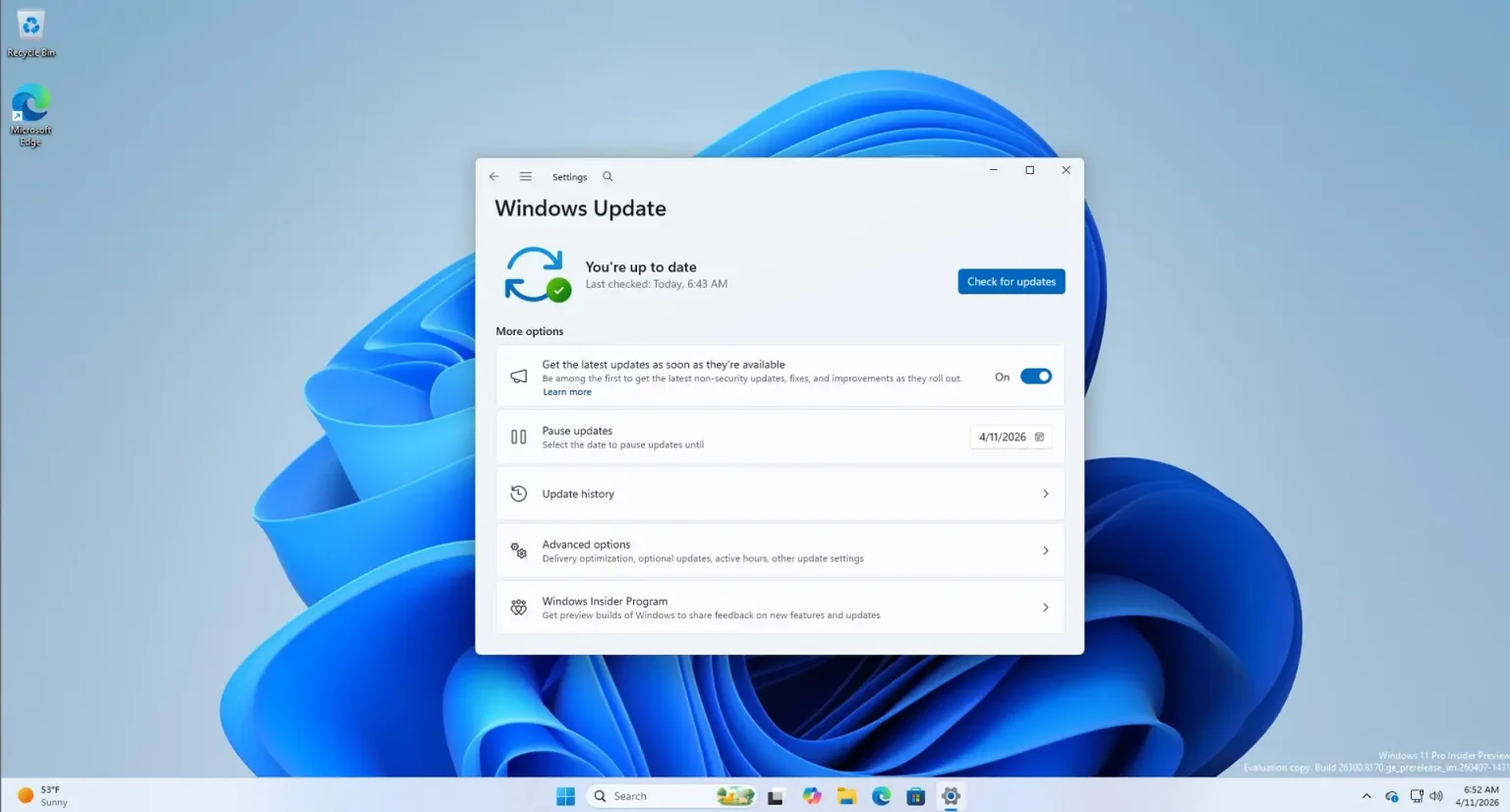
“To use the function, you simply click the calendar icon and pick a day. I selected April 15 – and the process paused immediately,” reported a tester from Windows Latest. “It works exactly as intended. You can even change the date later without the system triggering a sudden update check.”
Since the tool is still in development, users might encounter occasional loading issues where the dates fail to appear. Resetting the function by clicking “Resume updates” remains standard – it instantly clears custom settings to check for the latest software availability.
There is currently no confirmation on a maximum duration for these pauses, leaving it unclear if users can block updates for a full year or if a shorter cap will be enforced.
Additionally, Microsoft is exploring ways to accelerate the installation of major builds and provide better management of third-party drivers. This is intended to prevent external software from compromising overall system stability during the update process.
This initiative follows the “big fix” announced in March, which also promises a movable taskbar and refined Copilot integration. Recent builds suggest Microsoft is removing the AI’s branding from specific locations rather than removing the functionality itself.