
The best corporate events aren’t pulled together in the final weeks — they’re built months out, long before anyone walks through the door. Whether you’re running a national sales meeting, launching a product, or hosting an executive summit, timing shapes almost everything downstream: execution quality, venue coordination, budget, and how engaged your attendees actually are.
Wait too long to bring in corporate event production companies, and you’ll feel it — fewer venue options, rush labor surcharges, and custom staging ideas that simply won’t have time to come together. This guide breaks down when to lock in your production team and why, so you’re not scrambling in the final stretch.
Why Event Production Should Be Planned Early
Production isn’t just renting a few microphones and hanging some lights. It touches spatial engineering, AV schematics, broadcast bandwidth, technical rehearsals — the kind of work that doesn’t happen overnight. Getting ahead of it early pays off in a few concrete ways.
- Better venue coordination. AV setups live and die by venue infrastructure — ceiling load limits, power drop locations, loading dock access. Sort this out early, and you avoid ugly surprises later.
- More room to be creative. Custom stage builds, LED walls, projection mapping — none of that gets designed or fabricated overnight.
- Tighter budget control. Book early and you lock in equipment rates before rush fees and last-minute freight shipping start eating your margin.
- Vendor availability, guaranteed. The best production crews, audio engineers, and lighting designers get snapped up months ahead during peak season. Wait too long, and you’re working with whoever’s left.
- Fewer scheduling headaches. An early technical timeline keeps speakers, entertainment, and staging teams moving in sync instead of colliding at the last minute.
The Ideal 6–12 Month Event Production Timeline
Coordinating venues, AV crews, and creative teams across months means managing a lot of moving, dependent pieces. That’s why experienced event directors often lean on something like the Critical Path Method — mapping out which tasks depend on others (you can’t order LED panels, for instance, until stage dimensions are locked) so nothing stalls the schedule unexpectedly.
Here’s roughly how that timeline breaks down:
- 12 months out — Goals & budget alignment
- 9 months out — Select your production partner
- 6 months out — AV, lighting & staging design
- 3 months out — Branding, content & rehearsals
- 1 month out — Load-in logistics & testing
- Event week — On-site execution
- 12 Months Before
Start with the basics: what does success actually look like? Nail down attendee numbers, keynote requirements, and whether you’re going fully in-person or hybrid. Set baseline budget figures across venue, catering, and production. Then begin shortlisting venues based on capacity, ceiling height, and power availability — details that eliminate options fast once you start digging.
- 9–10 Months Before
This is when you bring your production partner on board. Getting them involved early means they can join venue site visits and weigh in on technical RFPs before decisions are locked. It’s also when creative concepting starts in earnest — early-stage designs, lighting moods, rough spatial layouts — alongside broader technology planning: main-stage displays, audio distribution, and whether you’ll need live-streaming infrastructure.
- 6–8 Months Before
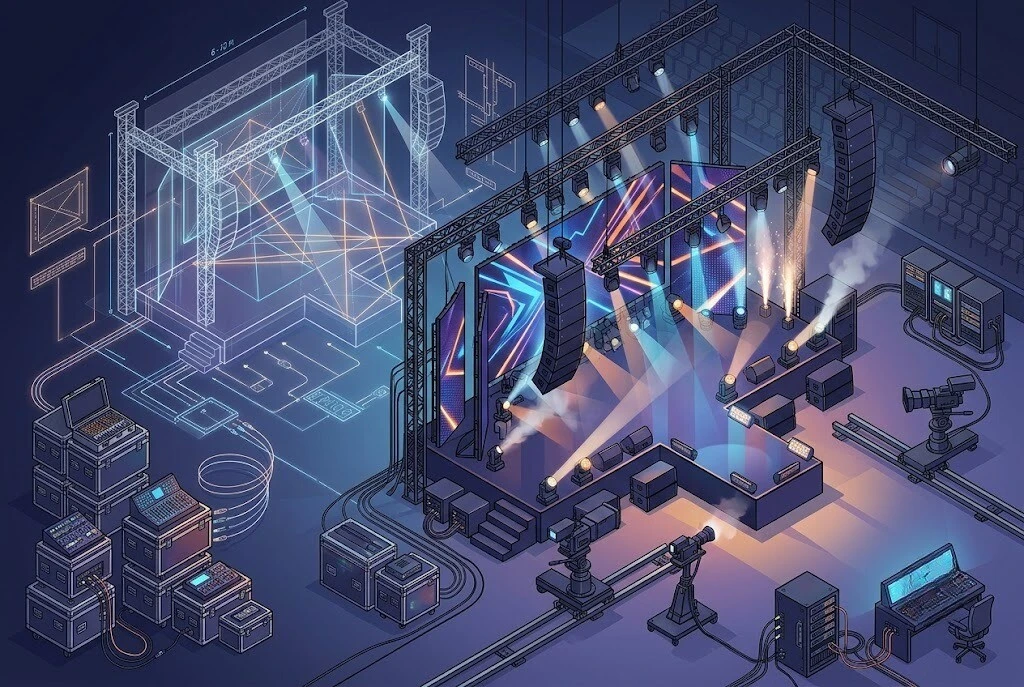
AV and lighting decisions get finalized here — LED wall resolution, microphone packages, camera positioning. Custom staging moves from concept to CAD diagrams and confirmed scenic elements. This is also the point to lock in specialized subcontractors — rigging crews, pyrotechnics, translation equipment — since these vendors tend to book up fast.
- 3–5 Months Before
Speakers need to confirm their technical requirements, slide formats, and media assets by now. Branding work ramps up too — digital signage, stage backdrops, app graphics. It’s worth scheduling a joint walkthrough with venue managers, scenic builders, and lead engineers around this point, if only to catch issues while there’s still time to fix them.
- 1–2 Months Before
Equipment gets pre-configured off-site — media servers, video switchers, stream feeds — before it ever touches the venue. Technical rehearsals run through time-coded show flows with stage managers and directors. And this is the moment to double-check freight schedules, union labor rules, and backup power plans, since none of these are things you want to discover are wrong on event day.
- Event Week
Load-in and setup happen first — staging, rigging, LED walls, all built to venue safety standards. A full cue-to-cue rehearsal follows, running lighting, sound, and video together. Then it’s live execution, with crew leads watching audio levels and feeds throughout the show.
Production Timeline Overview
| Timeline Phase | Core Focus | Key Deliverables |
| 12 Months | Objectives & Budget | Goals defined, baseline budget approved, venue shortlist |
| 9 Months | Production Partner | Agency contract signed, initial CAD drawings, technical scope locked |
| 6 Months | AV & Stage Design | Lighting plots confirmed, rigging plans approved, custom staging ordered |
| 3 Months | Content & Rehearsals | Speaker slide templates distributed, show flow drafted, branding finalized |
| 1 Month | Testing & Logistics | Load-in schedule set, equipment pre-racked, risk review completed |
| Event Week | Live Execution | On-site load-in, cue-to-cue rehearsals, live show control |
Factors That Influence Your Booking Timeline
Six to twelve months is a solid rule of thumb, but a few variables can push that window out even further.
- Event size and attendance: Thousands of attendees mean a longer setup window and heavier AV infrastructure.
- Venue restrictions: Historic buildings and union-regulated convention centers often come with permitting and safety approvals that take real time to clear.
- Hybrid or broadcast complexity: Multi-camera live broadcasts need dedicated internet lines, encoder testing, and integration with whatever virtual platform you’re using.
- Custom fabrication: Non-standard stage builds, or interactive displays, typically require weeks of off-site construction before they ever reach the venue.
Research from Bizzabo and Cvent points to a broader trend here too: event teams are prioritizing in-person execution while working with tighter internal capacity than before. Bringing in production expertise early is often what lets small internal teams pull off large-scale events without burning out.
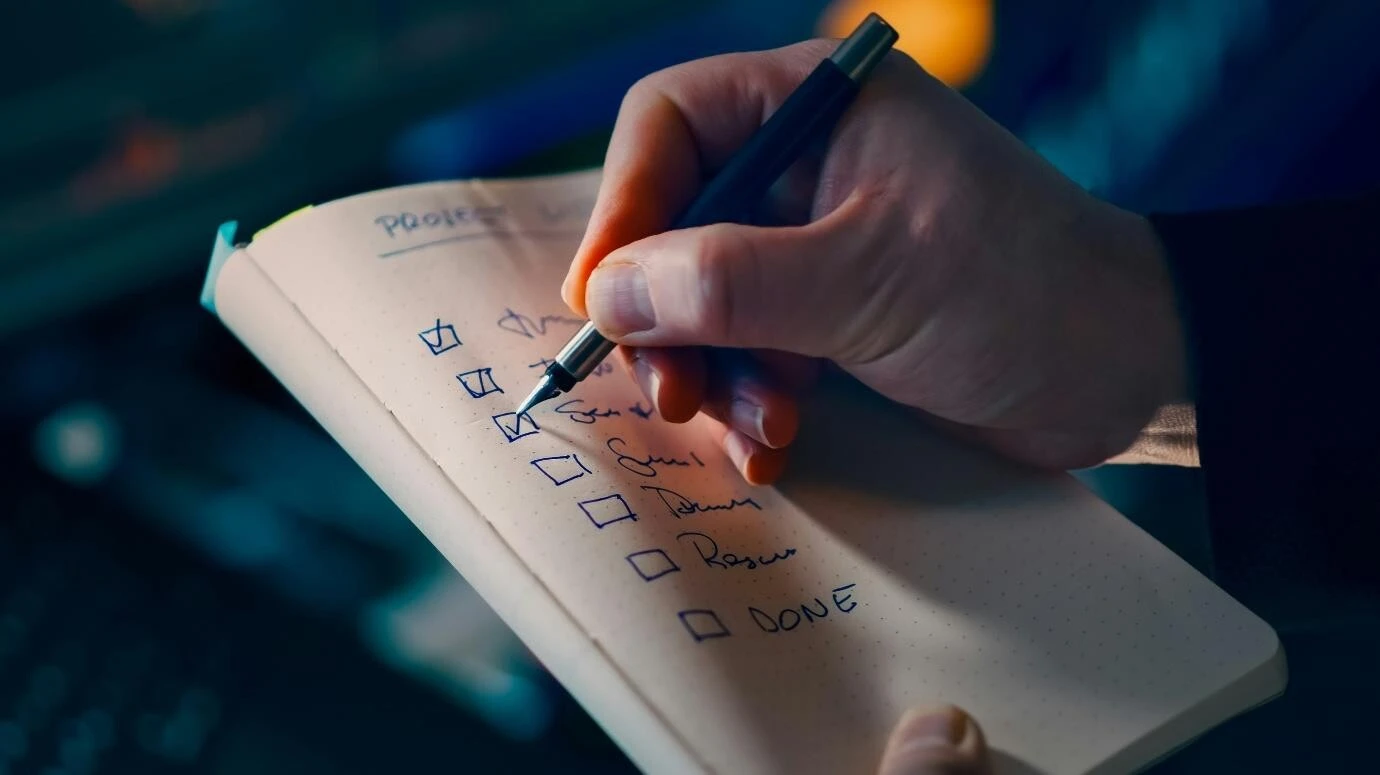
Early Booking Checklist
- Define primary event goals and attendee targets
- Establish budget parameters for production and AV
- Reserve primary venue space
- Contract a specialized production partner
- Finalize custom stage design and CAD floor plans
- Confirm speaker media requirements and cue sheets
- Conduct site walkthroughs with production leads
- Schedule pre-event equipment testing and cue rehearsals
Choosing the Right Production Partner
Picking a partner isn’t just about comparing equipment rental quotes. When you’re evaluating corporate event production companies, look past the price sheet — check for a portfolio that actually matches your event format, budgeting that’s transparent rather than vague, and a track record of solving technical problems under pressure. A good team doesn’t just execute; they function as an extension of your own staff, walking with you through every milestone along the way.
Final Thoughts
Booking event production early is still the single most reliable way to protect your budget, keep your creative options open, and give attendees an experience that actually lands. Start the process 6 to 12 months out, and your team gets the runway it needs to build custom staging, refine the show flow, and pull off an event that feels effortless — even though it never really was.