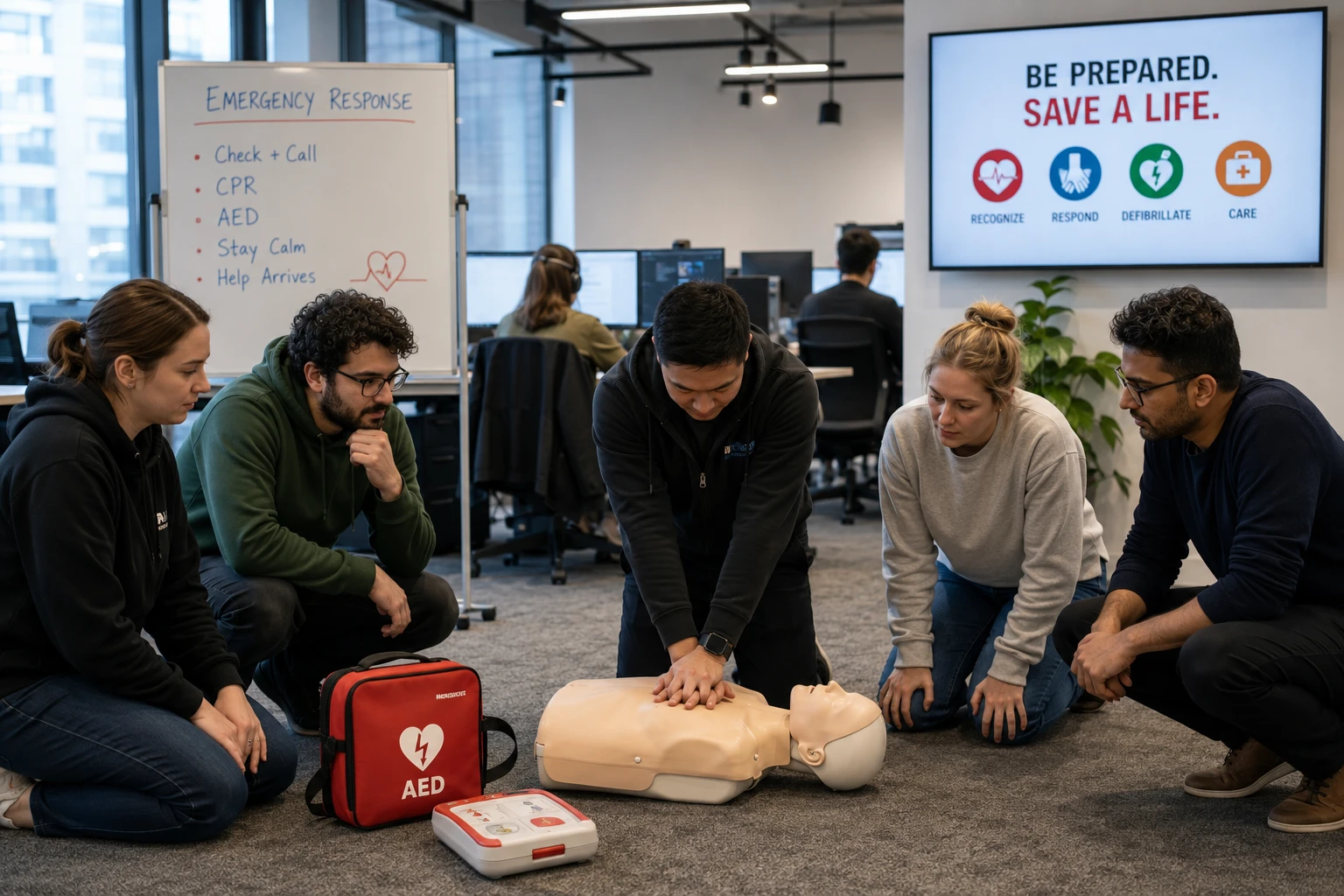

Tech offices often feel like the safest workplaces imaginable. However, prolonged sitting, high stress, and sedentary habits actively increase cardiovascular risks for your team. Equipping your staff with practical, hands-on first aid skills ensures they are prepared for sudden medical emergencies, keeping your workplace legally compliant and genuinely safe.
Walking into a modern tech office usually feels pretty relaxing. You see ergonomic chairs, noise-canceling headphones, and maybe a barista-grade espresso machine in the corner breakroom. Because nobody is operating heavy machinery or handling toxic chemicals, management often assumes that serious workplace accidents simply won’t happen there.
But medical emergencies do not care if you write code or design software for a living. Sudden cardiac arrest, severe choking, or an unexpected allergic reaction can happen right at the communal lunch table. Booking comprehensive Calgary First Aid and CPR training isn’t just about ticking an occupational health and safety box. It is about genuinely protecting the people who build your products.
Why do tech companies overlook medical emergencies?
We naturally tend to associate workplace danger with construction sites, transport hubs, and factory floors. When your biggest daily physical risk appears to be a nasty paper cut or a spilled coffee on a keyboard, emergency preparedness easily falls to the bottom of the priority list.
I remember talking to a startup founder who genuinely believed a standard plastic first aid kit in the bathroom was enough coverage for his team of fifty people. He had never considered what his team would actually do if someone collapsed during a high-stress product launch. The reality is that an office environment creates a massive false sense of absolute security.
When you are surrounded by comfortable amenities and smart people, you forget that the human body can fail without any warning. A box of colorful bandages won’t restart a stopped heart. You need trained hands for that.
What are the real physical risks of a desk job?
People love to joke that “sitting is the new smoking,” but the medical data behind that phrase is actually pretty terrifying. Sitting at a desk for eight to ten hours a day takes a massive toll on your cardiovascular health over time.
Add in the typical tech lifestyle: tight project deadlines, endless screen time, skipped lunches, and extreme caffeine consumption. This specific combination creates a perfect storm for elevated blood pressure and sudden heart issues. Heart attacks and sudden cardiac arrests are very real threats in corporate environments.
Additionally, office kitchens are prime locations for severe choking incidents. Slips and falls happen regularly on recently mopped lobby floors or icy winter walkways just outside the building. When your staff knows exactly how to respond to these common hazards, they become an immediate safety net for their coworkers.
How does stress trigger sudden cardiac events?
We all know what a massive stress spike feels like when a server crashes or a major client threatens to walk away. Your body immediately dumps adrenaline into your bloodstream, your heart rate shoots up, and your blood vessels constrict.
For someone with underlying or undiagnosed heart issues, that sudden, severe spike in stress can trigger a critical cardiac event. If a developer goes into cardiac arrest at their desk, the first few minutes are absolutely critical to their survival. Waiting for an ambulance without performing chest compressions drastically reduces their chance of a full recovery.
What equipment should a modern tech office have on hand?
A basic first aid kit is legally required, but it is just the starting point. To truly protect your team, you need the right tools paired with the right training.
- Automated External Defibrillators (AEDs): These devices analyze heart rhythms and deliver a shock if necessary. They are incredibly easy to use and save lives.
- EpiPens (Epinephrine Auto-Injectors): Essential for severe allergic reactions, especially in offices with catered lunches or shared kitchens.
- Trauma Shears and Pocket Masks: Key components for performing safe, effective CPR without hesitation.
How does training actually fit into a tech sprint schedule?
Many tech managers hesitate to book safety training because they fear the operational downtime. Having your entire engineering or customer support team offline for two full days sounds like a total nightmare for your sprint schedule and ticket queues.
This is exactly where blended learning formats shine. Your team doesn’t have to sit in a physical classroom for sixteen hours straight. They can complete the required reading and theory portions online, right from their desks, pacing it out over the course of a week.
Once the digital portion is done, they only need to step away for a single day of hands-on skills training. This modern approach keeps your office fully compliant with provincial safety regulations while minimizing the disruption to your daily workflow.
What is the hidden ROI of team safety?
Investing in your employees’ safety sends a powerful, unspoken message to your staff. It clearly tells them: “We value your life, not just your coding output.” That kind of empathy builds a profound sense of trust and loyalty within your office culture.
Team members who train together also build unique communication skills under pressure. Running through a simulated medical emergency requires clear delegation, calm voices, and tight teamwork. It is essentially a high-stakes team-building exercise that leaves everyone with a genuinely useful life skill. You give your staff the confidence to save a life, a benefit that stretches far beyond the office walls.
If you are looking for first aid training near the Capitol Hill neighborhood, specifically close to Confederation Park in the NW, then you may reach out to Coast2Coast First Aid/CPR – Calgary in that area. For more info and articles like this, visit:https://www.c2cfirstaidaquatics.com/
Frequently Asked Questions
- Is First Aid training legally required for software and tech offices? Yes. Occupational Health and Safety (OHS) regulations require a specific number of trained first aiders on-site at all times. This number depends on your total headcount and your specific province’s labor laws.
- What is the difference between BLS and Standard First Aid? Basic Life Support (BLS) is a fast-paced, high-intensity CPR course designed primarily for healthcare providers and professional first responders. Standard First Aid covers a much wider range of emergencies, from broken bones to burns, and is the ideal choice for general corporate workplaces.
- Are AEDs legally mandated for small offices? While not always legally mandated for very small offices depending on local laws, having an AED is highly recommended. Using an AED alongside CPR drastically increases the survival rate of sudden cardiac arrest victims.
- Can an employee be sued for giving First Aid at work? In Canada, the “Good Samaritan Act” generally protects individuals who voluntarily offer emergency medical assistance from legal liability. This applies as long as they act reasonably and stay within the scope of their training.
- How often do employees need to renew their certification? Standard First Aid and CPR/AED certifications typically expire after three years. Workplaces must carefully track these dates to ensure their designated first aiders always have current, valid certificates.