
Tech giant Meta has officially announced a sweeping upgrade to its security measures for the upcoming FIFA World Cup 2026, aiming to shield global football fans and athletes from digital harassment and cyber abuse during one of the most thrilling sporting spectacles on earth.
The corporation anticipates a massive wave of user engagement across its applications as fans connect worldwide, warning that while the vast majority will celebrate their favorite teams, malicious actors will inevitably seek to exploit the event through fraudulent schemes or targeted harassment – both in real life and online.
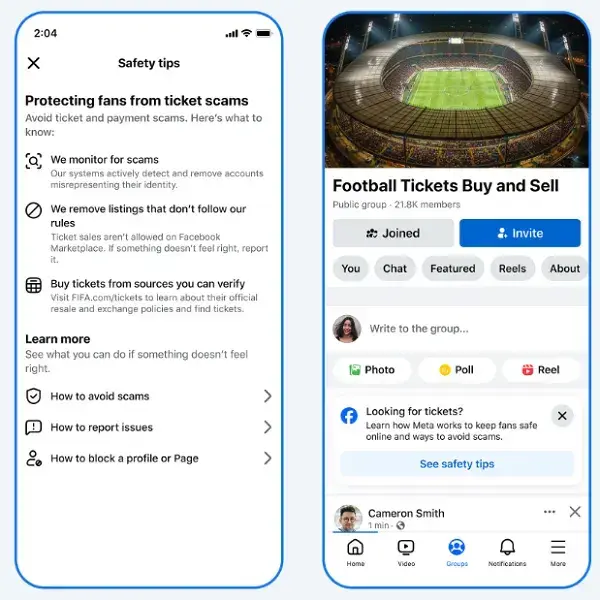
To mitigate these pressing risks, Meta’s initial strategy focuses heavily on protecting users from ticket fraud and predatory accommodation scams by significantly intensifying its active monitoring of related platform activities.
Large-scale international sports tournaments regularly trigger a sharp rise in deceptive practices, including counterfeit ticket sales, fraudulent immigration offers, and misleading lodging opportunities targeting traveling supporters – Meta stated, adding that specialized internal teams are actively tracking and disrupting these violations.
Beyond internal monitoring, Meta is closely collaborating with major industry stakeholders to dismantle deceptive networks through collaborative data-sharing initiatives like the Global Signal Exchange (GSE) and Meta’s Fraud Intelligence Reciprocal Exchange (FIRE).
A key partnership with Visa through the GSE framework helped Meta proactively intercept scams across multiple channels – the company stated, explaining that Visa’s anti-fraud team helped identify and eliminate a Facebook network directing users to fake websites mimicking official World Cup branding and promoting illicit gambling content.
To empower individual users against these threats, Meta has deployed new in-feed notifications designed to warn buyers about suspicious ticket vendors and educate them on how to avoid falling victim to transactional scams.
The company is also working alongside Mexico’s consumer protection agency (PROFECO) to launch a creator-led awareness campaign highlighting prevalent tournament scams, such as the sale of counterfeit tickets and the creation of deceptive impersonation websites.
Shifting focus to personal safety, Meta is implementing aggressive preventative measures specifically designed to combat user abuse within Instagram direct messages.
This proactive stance follows a severe 2021 incident where Instagram became a primary vehicle for racist abuse directed at players from prominent clubs like Manchester United, Chelsea, and Liverpool, prompting intense condemnation from team officials who urged Meta to take additional action, which subsequently led to harsher penalties and features allowing users to restrict message access.
The legacy of that online backlash clearly continues to shape Meta’s contemporary security strategies as the tournament draws closer.
We maintain clear rules prohibiting bullying, harassment, violent threats, and hate speech toward players or fans – Meta declared, reiterating its commitment to removing such toxic content immediately upon discovery.
The tech giant will leverage community user reports alongside advanced artificial intelligence systems to proactively identify and flag policy-violating material before it spreads further.
Demonstrating its capabilities, Meta revealed that between October and December 2025, it removed 2.6 million pieces of hate speech across Facebook and Instagram, detecting over 74% of that content before users even reported it.
Given the historical vulnerability of social media platforms during high-profile sporting events, Meta’s current emphasis on deploying preventative measures against abuse and deception remains highly logical.
The highly anticipated FIFA World Cup 2026 tournament is officially scheduled to kick off on June 11.