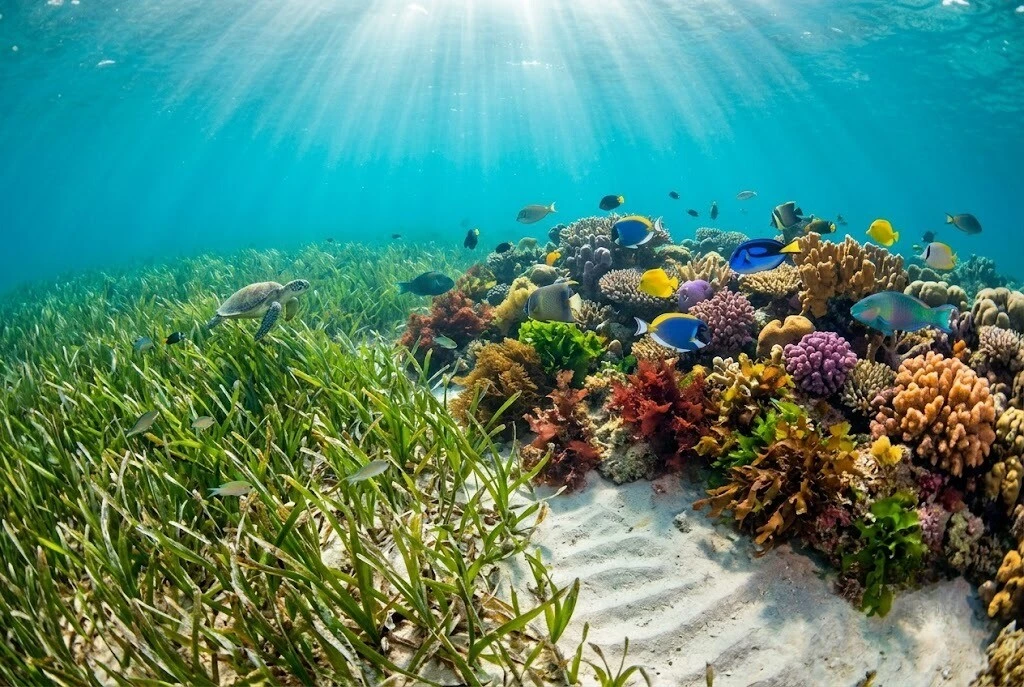

Coral reefs are well-known for their bright fish, vivid corals, and amazing variety of life. But there is another group that helps keep these underwater places healthy every day—plants in the ocean and those that look like plants. The lush seagrass fields and tiny algae give food, shelter, and oxygen. They also help reefs do well even when the ocean changes.
Understanding plants in a coral reef helps us see how these places work together as different habitats. There are not many true flowering plants in a reef, but you will find lots of other plant life and algae that are very important to keeping things balanced. This guide will talk about the main kinds of plant life seen near coral reefs and why they are as important as the reefs themselves.
Why Marine Plant Life Matters in Coral Reefs
The plants that grow in the sea are the start of healthy reef systems. They help many types of living things throughout their lives. These plants use sunlight to make energy. They also give off oxygen into the water.
Their ecological importance includes:
- Making oxygen that helps life in the sea.
- Giving food to fish that eat plants, turtles, and sea animals with no backbone.
- Keeping dirt in place and making the water clear.
- Giving young fish and crabs a safe place to grow.
- Taking in carbon dioxide and help control the Earth’s temperature.
Without sea plant groups, coral reefs would have a hard time keeping up the rich mix of life that they are known for.
Common Marine Plants and Plant-Like Organisms Around Coral Reefs
1. Seagrasses
Seagrasses are the only real flowering plants that live fully underwater. You can find them growing in shallow waters near a lot of coral reefs. There, they make thick meadows where sea turtles, dugongs, and many kinds of fish like to eat. Their big root systems help hold the sand in place and stop it from washing away.
2. Macroalgae (Seaweed)
Macroalgae, which people often call seaweed, are green, brown, or red. If there is too much seaweed, it can show that the reef is not healthy. But when there is a good balance, seaweed gives food and shelter to many animals in the sea. A lot of fish on the reef eat this algae. This also helps to keep things in nature balanced.
3. Phytoplankton
These tiny plants float in the ocean and make food for many other animals. They are at the bottom of the ocean food chain. Even though you can hardly see them, they help many animals in and around the water. They make food using sunlight, which helps feed other sea life.
4. Symbiotic Algae
One of the most amazing things about coral reefs is the small algae that live inside coral tissues. These algae help corals a lot by giving them most of the energy they need to grow. In return, the coral gives the algae a safe place and food. This bond is very important for building strong and healthy reefs.
How Marine Plant Life Supports Reef Biodiversity
Each layer of reef plants helps keep life going in the sea. Small fish hide in the seagrass, then move to live in the coral when they get older. Plant-eating fish eat seaweed, so it does not cover and harm the coral. When old plants break down, they become food for many tiny living things.
This natural cycle helps build a stable place for life. In this place, many kinds of plants and animals need each other to live. When the plants grow well, they make the reef stronger. This is because they help keep the water clean and give more food for the animals to eat.
Threats Facing Marine Plant Communities
Like coral reefs, underwater plants are also having a hard time because of the environment. What people do and how the climate is changing can harm these special places.
Some major challenges include:
- There is a lot of coastal pollution and too much runoff from nutrients.
- The ocean is warming up.
- The land near the ocean is getting built up, and this is destroying habitats.
- Sedimentation covers things and stops sunlight from getting in.
- People use bad fishing and boating habits that the ocean cannot keep up with.
Taking care of plant homes in the ocean helps keep whole reef systems safe for people in the future.
Simple Ways to Support Marine Ecosystems
Conservation starts when people make smart choices. You can help make the oceans better by using less plastic, picking safe seafood options, following the rules in protected sea areas, and joining in clean-up events at the coast. Responsible tourism is also important. When you visit, avoid harming reefs or the seagrass beds nearby.
Simple daily actions, when people do them together, can help keep the balance that lets life in the ocean grow and be healthy.
Conclusion
Plant life in the ocean may not get as much attention as bright corals or fish, but it is just as important. Seagrass helps keep shores steady, and algae work with corals to help them grow and live. These plants keep life going all over the reef areas. When you learn about plants in a coral reef, you see the deep links that help the ocean stay strong and healthy. If people understand their role and back efforts to protect them, these amazing places in the water can last for many years and support many lives.