
GitHub has debuted a continuous, AI – driven system designed to streamline how accessibility issues are identified and resolved across its various engineering departments. By leveraging a combination of GitHub Actions, Copilot, and the GitHub Models APIs, the platform now automatically converts user feedback into structured, prioritized technical tasks. This implementation ensures that barriers to accessibility are tracked with the same rigor as high – priority product features.
In the past, accessibility reports were often scattered across social media, support tickets, and public discussion forums. This fragmentation made it difficult for specialized teams – such as those managing site navigation or authentication – to claim clear ownership of specific issues. GitHub solved this challenge by centralizing all input through standardized templates that capture vital metadata, including the report’s origin and the specific barriers encountered by users.
Carie Fisher, who serves as the Senior Accessibility Program Manager at GitHub, emphasized the difficulty of managing such a high volume of fragmented information within a massive organization, noting,
Accessibility feedback is gold, but at scale, it can quickly become overwhelming.
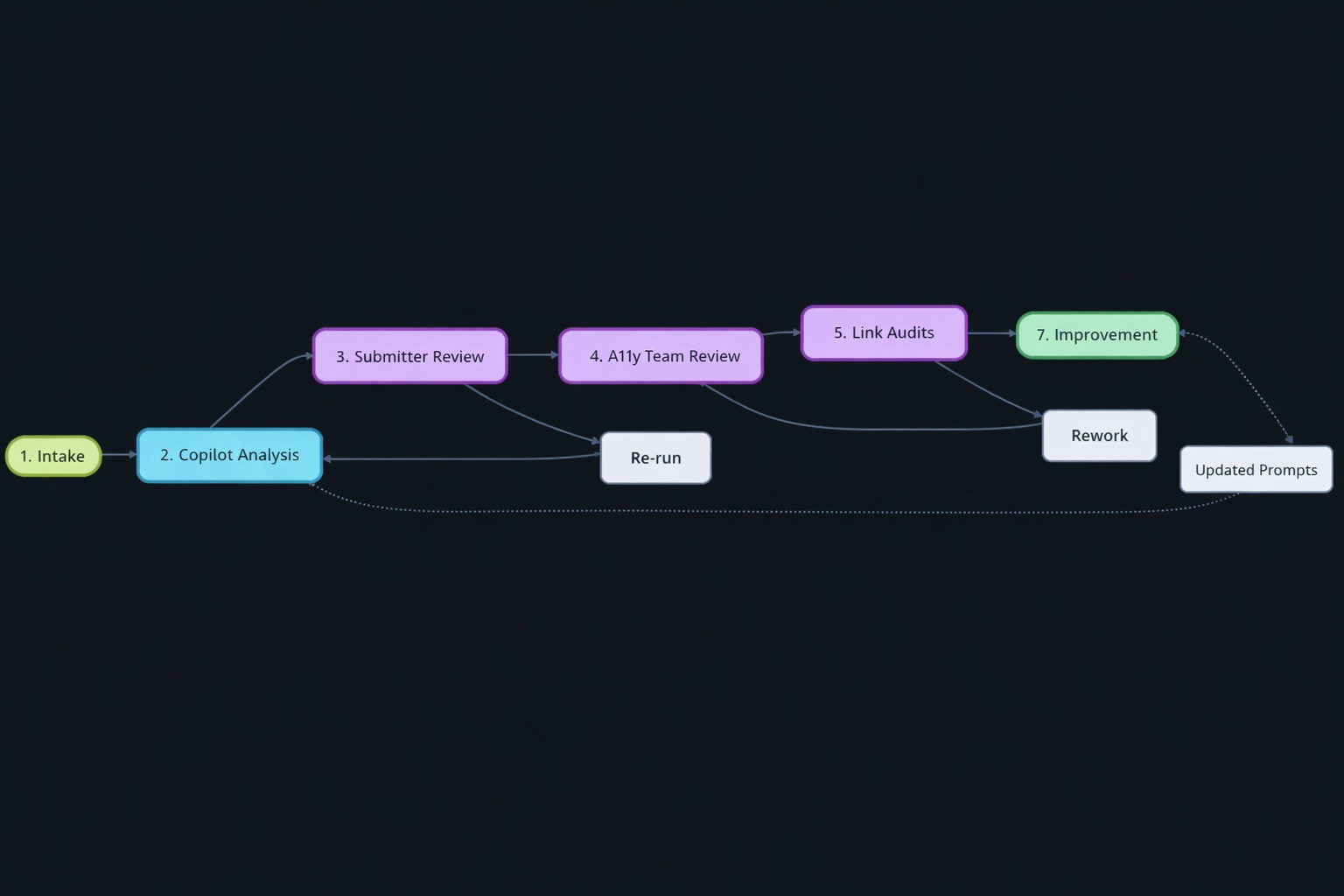
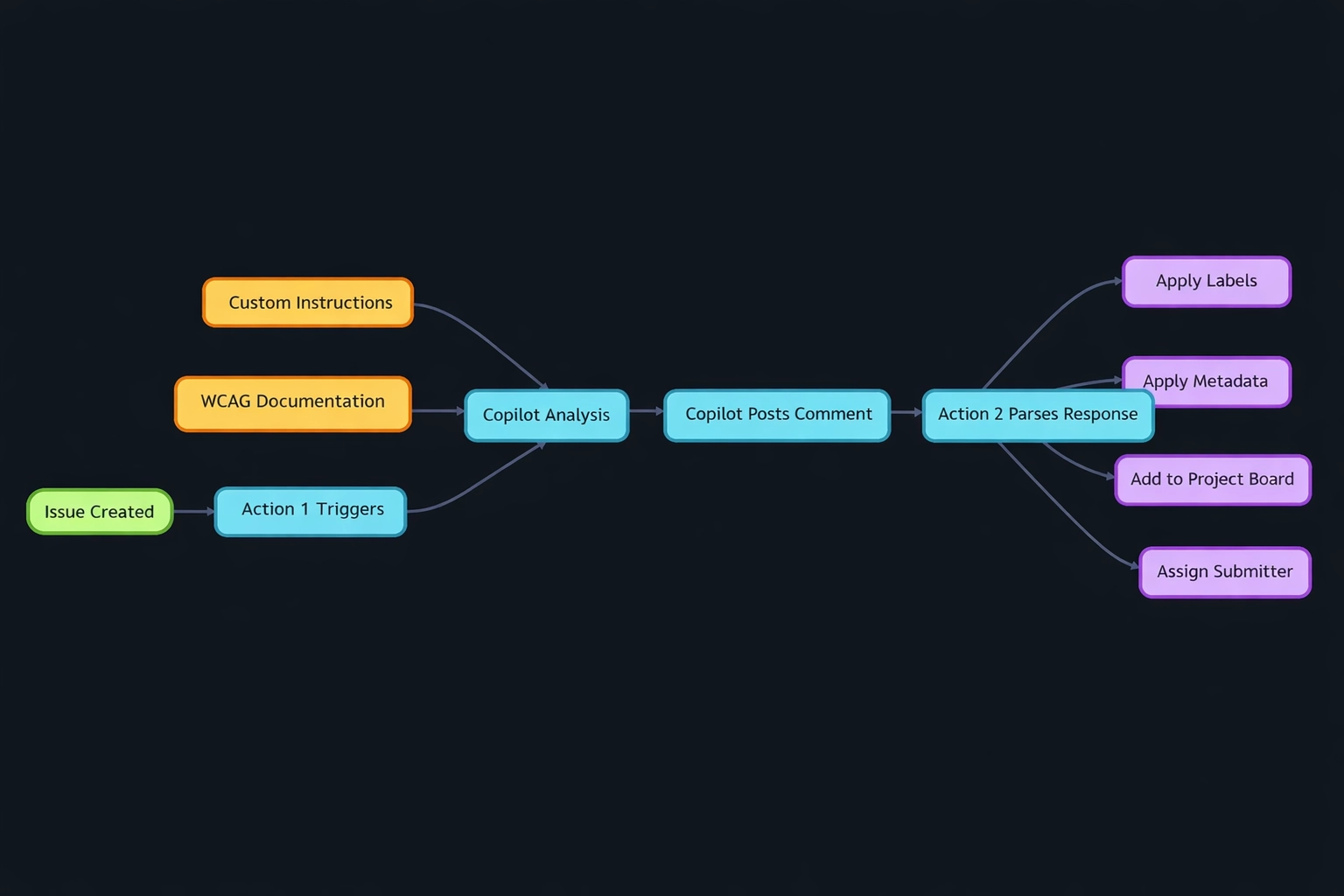
The new workflow prioritizes rapid categorization to prevent teams from becoming overwhelmed. Feedback from various channels is funneled into a single pipeline and acknowledged within days. Once a report is submitted via the custom accessibility template, it triggers a GitHub Action that uses AI to analyze the content and update a central tracking board immediately, providing instant visibility to the engineering staff.
A subsequent automated Action utilizes GitHub Copilot to evaluate the tracking issue against the Web Content Accessibility Guidelines (WCAG). The AI determines the severity, identifies the affected user groups – such as those using screen readers or keyboards – and auto – fills approximately 80 percent of the required metadata. The prompt used for this process serves a dual purpose: it performs triage analysis by classifying issues and acts as a subject – matter expert to coach teams on writing more accessible code.
While the AI handles much of the heavy lifting, human experts remain at the heart of the process. The accessibility team reviews all drafted analysis on a specialized “first – responder” board to verify category labels and severity rankings. Any discrepancies or corrections made by these human reviewers are documented, creating a feedback loop that helps refine the AI’s prompts and improves the accuracy of future automated outputs.
After a report is validated, the team establishes a clear path to resolution, ranging from immediate code adjustments to long – term documentation updates. By linking these reports to internal compliance audits, GitHub can better understand the real – world impact of specific issues. This context allows the organization to prioritize fixes that address the highest risks to users rather than focusing on theoretical or minor violations.
The efficiency of this new system was highlighted by Customer Engagement Specialist Lianne G. in a LinkedIn post regarding the speed of feedback resolution, where she stated,
We resolve 4x as much feedback in 90 days with our new AI-powered workflow.
The quantitative results are impressive, with the resolution rate for accessibility concerns within 90 days skyrocketing from 21 percent to 89 percent. Overall resolution times have dropped by more than 60 percent year – over – year, demonstrating a significant improvement in operational speed. This data provides the company with clear visibility into recurring patterns, allowing for more proactive engineering decisions.
This evolution demonstrates a growing trend of applying continuous AI systems to complex operational tasks. By merging automated classification with expert human review, large organizations can effectively manage cross – cutting engineering concerns like digital accessibility without losing the human touch. The approach reflects a shift toward using AI not just for creation, but for managing the lifecycle of high – priority software improvements.