
Anthropic has officially launched an “Automatic Mode” within its Claude Code system, enabling the platform to tackle complex, multi-stage software engineering tasks with minimal human intervention. Developers now only need to define their high-level objectives, while the AI independently manages code generation, execution, tool utilization, and iterative improvements, pausing only at critical checkpoints to secure human approval for sensitive operations.
This update represents a major shift from the previous permission-based framework, where users were required to manually authorize almost every action, including shell commands and file modifications. While that older model prioritized safety, it often led to significant “approval fatigue” during long sessions, as developers found themselves spending more time managing requests than actually building software.
Sid Chaudhary, Head of Product at Intempt, highlighted the newfound freedom the tool provides for modern workflows:
“Now you can run, Claude, and just walk away. Coffee break. A real walk. You don’t have to babysit it.”
To support this autonomy, the system incorporates a robust, multi-layered security and execution architecture that monitors both data inputs and active operations. On the input side, data retrieved by tools – such as file reads, shell results, and web server responses – is thoroughly vetted before being added to the system’s context. If any content is flagged as malicious or appears to manipulate core instructions, the system issues warnings to ensure the data is treated as untrusted.
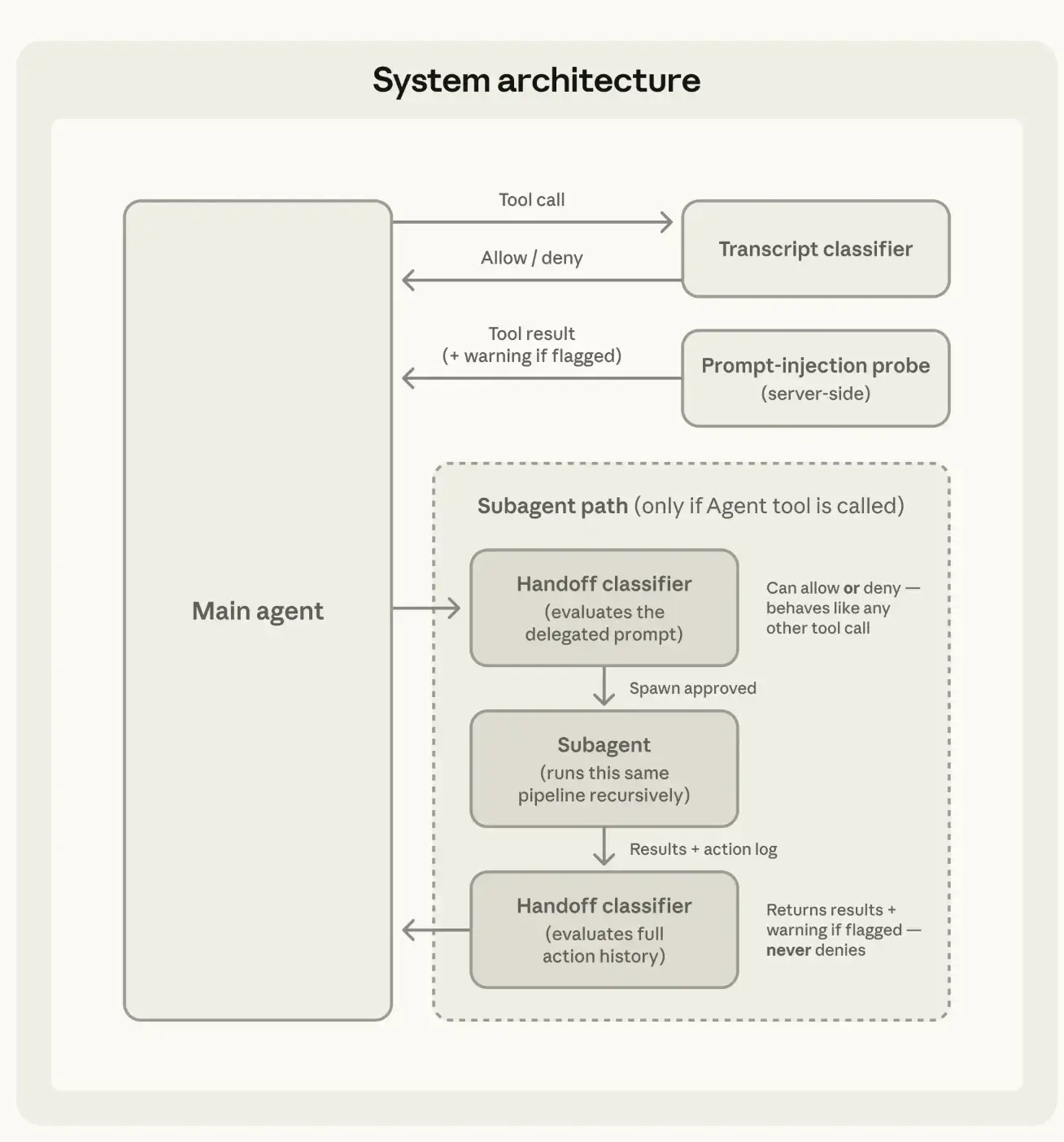
At the execution level, every proposed action is evaluated against a set of safety protocols before it is allowed to run. This automated approval mechanism filters out routine, safe operations while escalating ambiguous or high-risk cases for manual human verification, a balance that significantly reduces the volume of repetitive interruptions without compromising the integrity of the development environment.
Testing engineer Ankit Kalluraya explained how the interface communicates these security pauses to the developer:
“In automatic mode, the loading indicator now turns red when a permission check is triggered, giving you a clear visual signal that Claude is pausing for confirmation.”
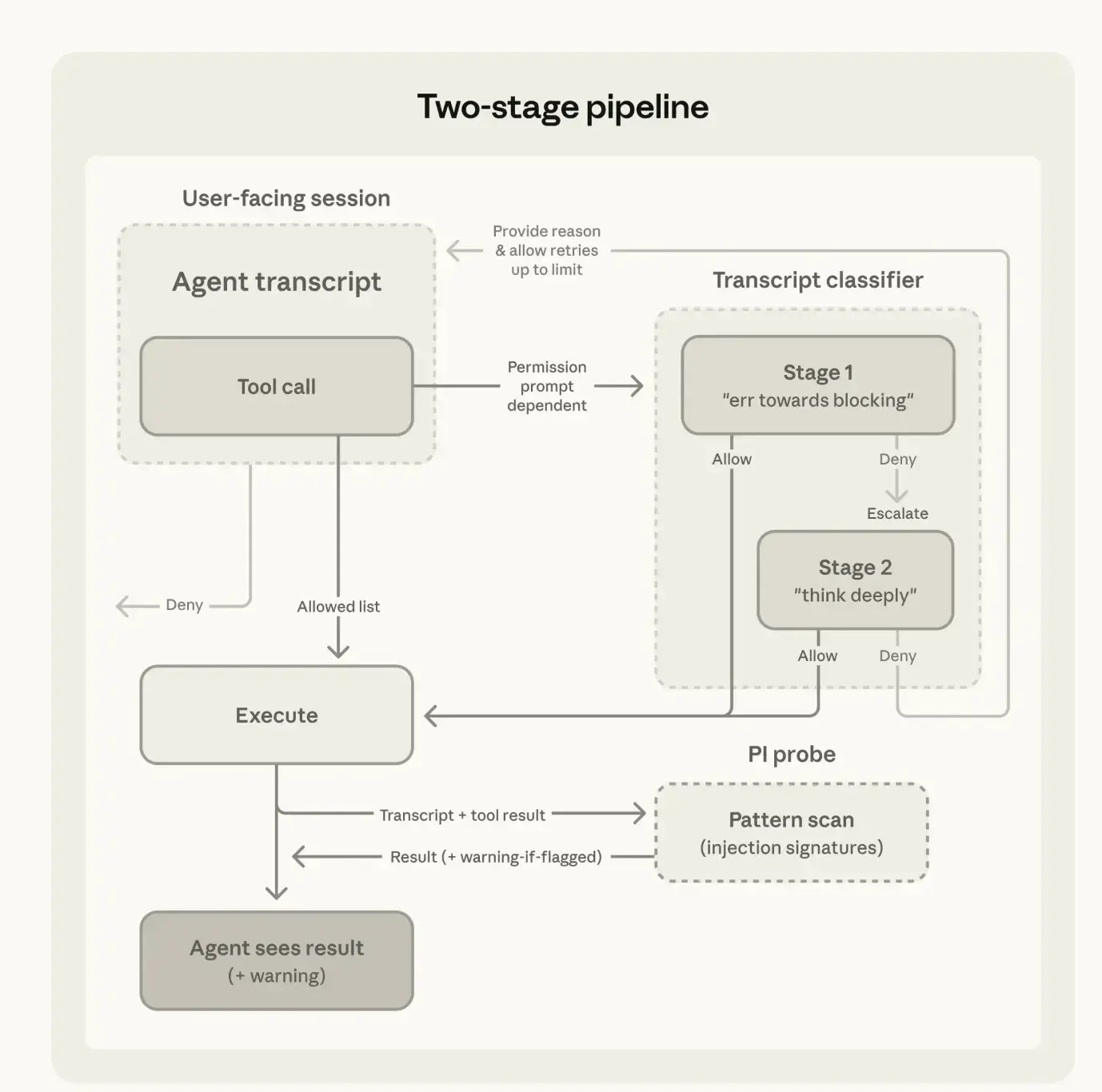
The efficiency of the system is driven by a two-stage classification approach designed to balance speed with thoroughness. A fast initial filter manages the majority of standard tool calls, allowing them to proceed with minimal latency and cost. Only operations identified as uncertain or potentially risky are moved to a deeper analysis stage, which enhances the detection of edge-case threats while maintaining overall performance and intent alignment.
Nikolay Kondratyk, Director at Playtika, pointed out the organizational implications of this shift in AI roles:
“In auto mode, the AI now acts as the approver, rather than just the actor. Most governance documents still specify a human, and those documents haven’t been updated.”
Mayank Agrawal, Lead Engineer at Zethra OS, noted the inherent tension in this evolution in a brief post:
“This is where resilience becomes a security concern.”
Furthermore, the safety protocols of Automatic Mode extend to sub-agent workflows. During delegation, outbound checks confirm that the assigned sub-task matches the user’s original intent. Upon completion, the system performs a retrospective audit of the sub-agent’s entire execution history to identify signs of prompt injection or manipulation that may have occurred during runtime, flagging any discrepancies before the results are returned to the main agent.
Anthropic has stated its commitment to further refining the trade-off between security and operational costs. By expanding its suite of evaluation tools and pursuing iterative improvements, the company aims to make autonomous workflows safer than traditional unshielded environments, while still advising users to remain aware of residual risks and actively report any issues encountered during use.