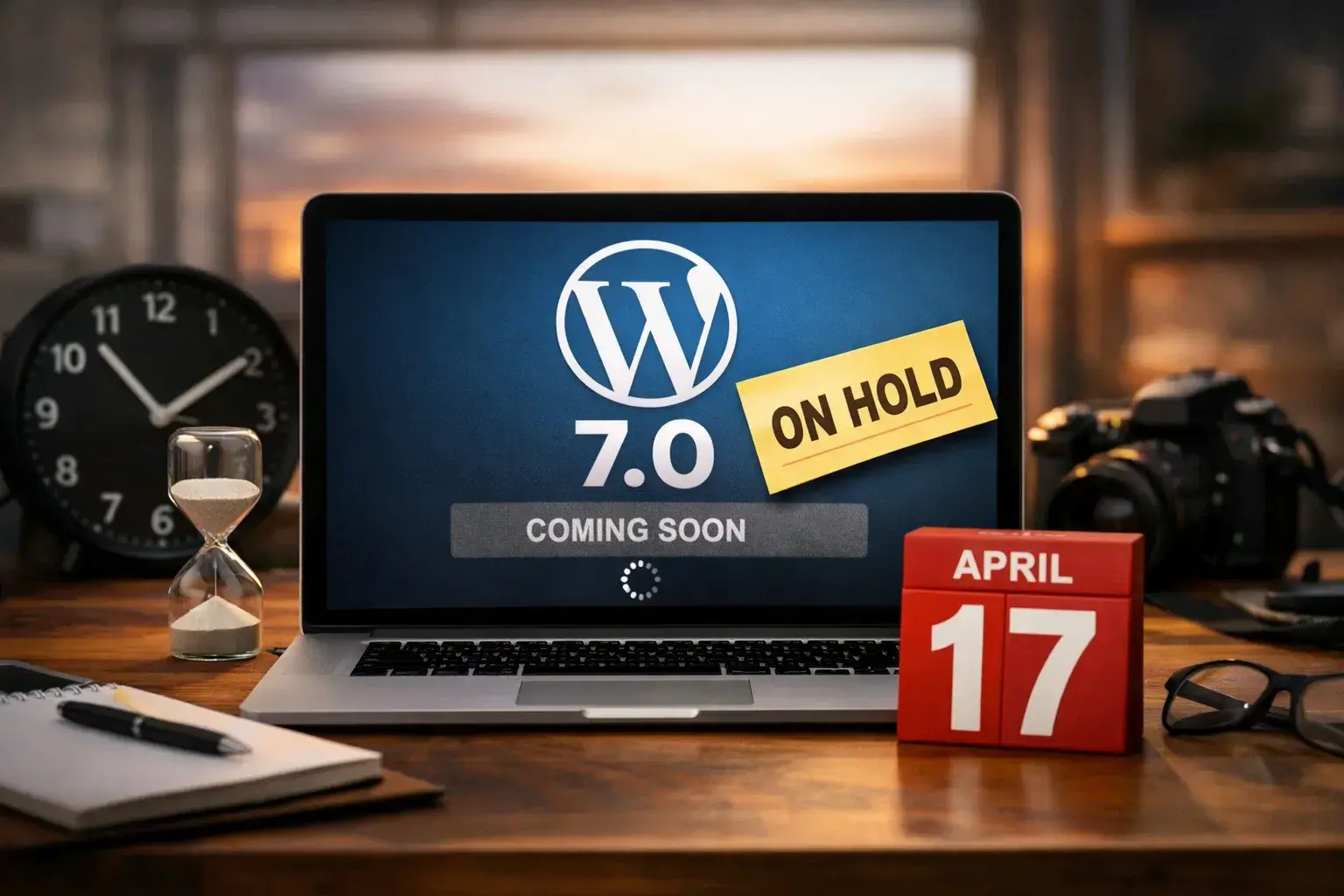

The WordPress project is taking a step back. Jonathan Derozier, a core developer backed by Bluehost, announced that preliminary releases for version 7.0 have been halted until April 17, with a revised release schedule expected by April 22. The pause marks a significant departure from the original plan to ship on April 9 during WordCamp Asia.
This decision emerged from a critical technical challenge that came to light after RC1 was released. The issue centers on real-time collaboration – a flagship feature for WordPress 7.0 – and how it interacts with the site’s caching mechanism. When users open the editor to work simultaneously with others, the system’s dependency on post metadata inadvertently disables query caching for post requests, a problem that wasn’t caught until late in the release cycle.
The Database Schema Dilemma
The discovery forced a difficult choice. Earlier in February, Peter Wilson, a contributor sponsored by Fueled, had proposed creating a separate database table specifically for real-time collaboration. Mullenweg initially approved the concept, but the proposal was rejected before RC1 launched. Automattic team members concluded that implementing a new database schema this late posed too much risk compared to quick fixes in the metadata system, pushing the table redesign to version 7.1 instead.
Wilson’s response was unequivocal. He challenged the safety of rushed changes to core functions like WP_Meta_Query and WP_Query, arguing that a complete removal of real-time collaboration from 7.0 would be preferable to unstable patches. Since then, he has submitted a merge request proposing a concrete schema and recommending the new table be tested first within the Gutenberg plugin before any core modifications go live.
Mullenweg’s call for a pause came on March 30, essentially rolling the project back to beta status even as version numbering continued forward. The delay allows the development team and project leadership to regroup, tackle undefined issues systematically, and determine the best path forward without crushing deadlines.
An Unconventional Versioning Approach
“By that date, the core information about upcoming work will be clearer,” Derozier wrote. “The development team and project leadership will be able to craft a new, well-considered schedule for the final stretch of version 7.0.”
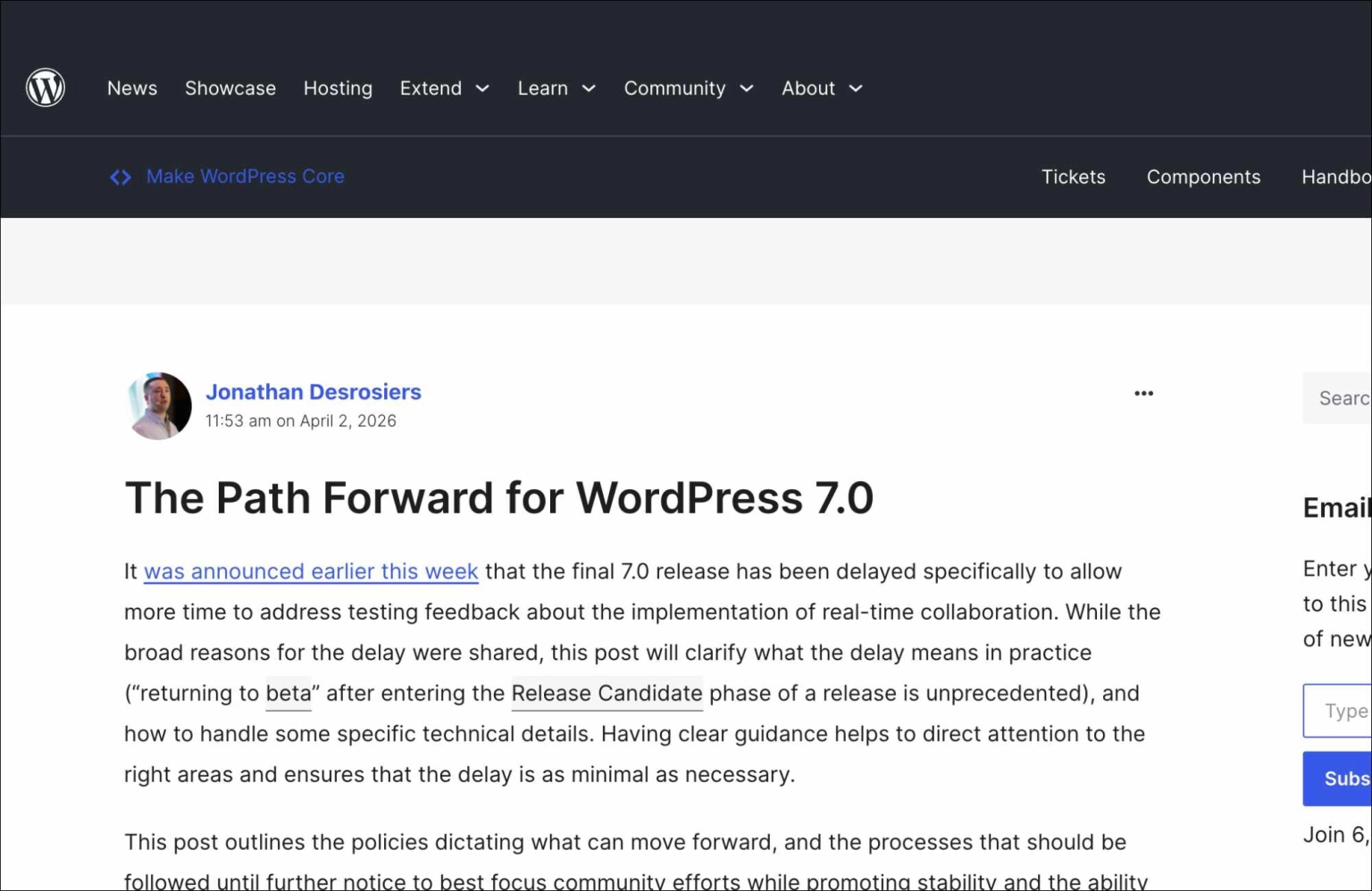
Acknowledging the unprecedented nature of this situation, Derozier made an unconventional decision about version numbering. Rather than reverting to beta designations, the project will continue using numerical release candidate labels – RC3, RC4, and so on. In practice, these will function as beta versions, but the naming choice minimizes confusion about which version testers should use and ensures sites update correctly when future releases arrive.
“This is somewhat unorthodox,” Derozier explained. “But it’s the most technically sound approach, keeping confusion to a minimum about which version to test while guaranteeing that sites will update properly when future versions ship.”
Community Response and Testing Guidelines
The community response has been largely supportive of the decision to pause rather than ship a flawed release. However, the delay pushes version 7.0’s launch beyond May at best. The team must cycle through revised beta-equivalent versions and release candidates for testing before a stable build can be declared ready.
Originally scheduled for April 9 during the WordCamp Asia Contributor Day, the release now faces a much longer runway. That extra time is proving necessary. The real-time collaboration feature, which promises to transform how teams edit content together, cannot ship with a broken cache system. The integrity of that feature depends on solving it right, not fast.
For those testing version 7.0 during this pause, guidance is straightforward. Developers should pull from nightly builds generated from the 7.0 branch. Access comes via the WordPress Beta Tester plugin by selecting the “Bleeding edge” channel and the “Nightlies” stream. These builds offer the latest development code for testing before stable releases materialize.
The database schema question remains open. Wilson’s push for a proper table structure before launch reflects broader concerns about long-term sustainability. Moving forward, the WordPress community will need to balance getting features to users with ensuring the technical foundation can support them reliably. For now, April 22 marks the next milestone – when a realistic roadmap finally emerges from the pause.